Jewellery growth library · For independent store owners and marketing teams.
Updated · Published by AlphaPixels, a Winnipeg-based agency serving Canada and the United States.
Quick answer: Show customers how your actual custom-design process works, answer the questions that make a first consultation feel uncertain and request enough context for a useful discussion. Use real work and clear permissions, then connect every example to an appropriate enquiry path.
Want to apply this to your store? Talk it through with Jay.
Explain the process customers cannot see
A customer may love the idea of custom jewellery but have no idea what the first meeting involves. They may worry that they need a complete design, that an inherited stone cannot be reused or that asking a question commits them to an order. Your page should resolve the uncertainties your team actually encounters.
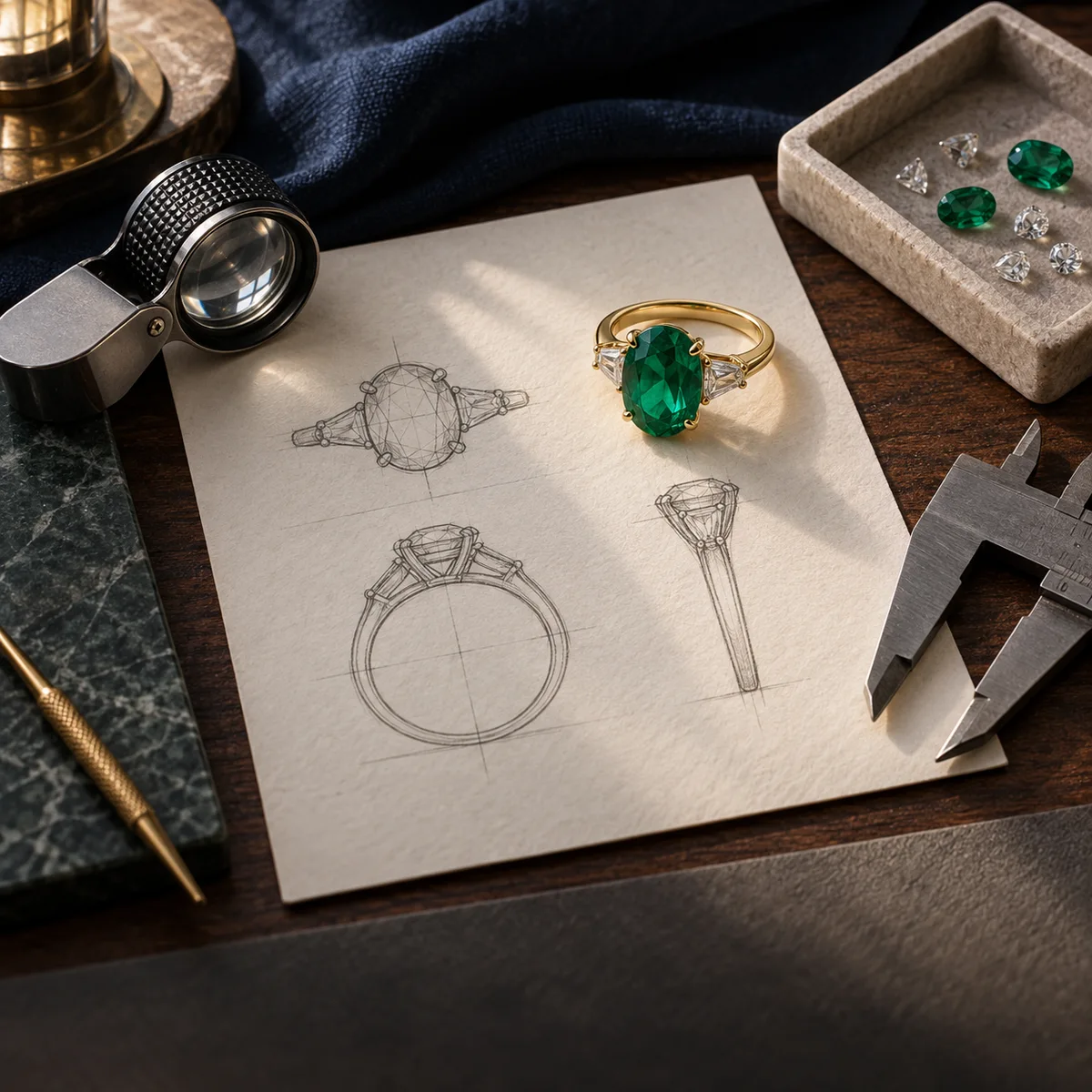
Map your process with the goldsmith or designer before writing the page. Describe the discovery conversation, feasibility assessment, design approval, quotation and production stages that genuinely apply. Where the order can vary, explain why. Avoid presenting a generic design process as your own operating policy.
- What the first conversation covers and who attends.
- What photos, references or existing pieces are useful.
- When technical feasibility and material suitability are assessed.
- When a quote is prepared and what can change it.
- What the customer approves before production begins.
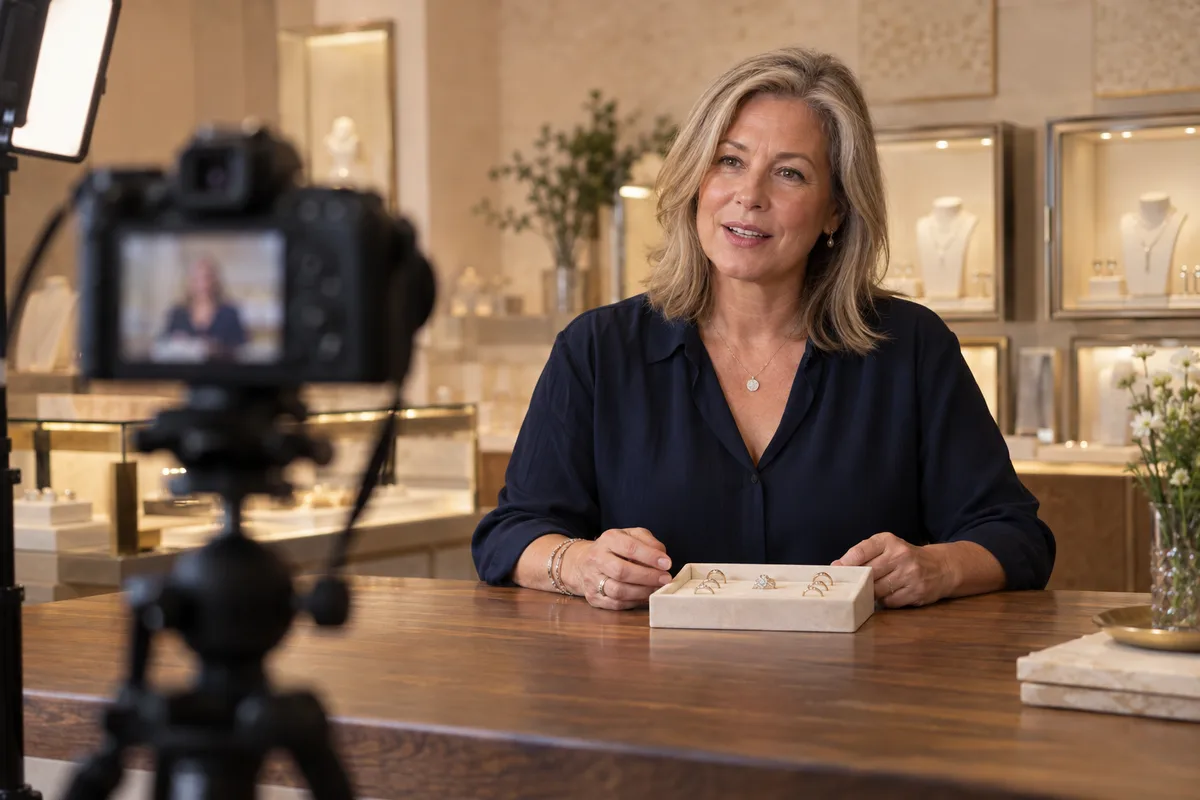
See the idea in action · 1:20
From discovery to store visits
See how discovery, your website and a useful follow-up can work together to help customers take the next step toward your store.
An illustration of our approach, not a client case study. Read the full video transcript.
Discuss a plan for my store →Use examples that explain a decision
A finished-piece photograph shows the result. A short explanation of the brief, design constraint and chosen solution shows your expertise. Consider a story about adapting a setting to a customer’s preferred profile, balancing an heirloom’s character with everyday wear, or choosing between different design directions.
Use photographs and stories you have permission to publish. Remove personal inscriptions, identifying details and proposal plans unless sharing them is explicitly approved. If a visual is a concept or rendering, identify it accurately so a reader does not mistake it for a completed client piece.
Product accuracy matters. Keep proportions, stone count, setting details and metal appearance faithful when preparing imagery. Use your professional judgement for factual statements about durability, resizing or material suitability; marketing copy should not substitute for assessment of the actual piece.
Build a consultation form that improves the conversation
Ask for the type of project, what the customer would like to achieve, the preferred store or meeting format and any meaningful deadline. Allow inspiration links or a description. Make clear that images support an initial discussion and do not establish feasibility or a final quote.
Distinguish a sentimental deadline from a confirmed production date. If someone is planning for a wedding or anniversary, record the date and have the team assess capacity before making promises. The form should help staff ask better questions, not automatically accept work the workshop cannot deliver.
Working example: Example enquiry prompt: Tell us what you would like to create or change. You can share a reference, describe an existing piece and mention your preferred timing. Our team will confirm the next step after reviewing the details.
Create content for the questions that delay action
Choose topics from real consultation questions. Explain how to prepare for a design meeting, how to describe an idea without technical vocabulary, what happens when an existing stone is assessed and what influences the stages of a custom project. These are useful even when the reader is not ready to book today.
Separate general education from a decision about a particular piece. A guide can describe the factors the team considers; it should not guarantee that any stone can be reset or that a project can be completed within a universal timeframe. Link the guide to the consultation page for a case-specific discussion.
Repurpose a useful explanation into a short video, a staff answer and a service-page FAQ. Keep a single approved answer as the reference so the wording does not drift across channels. Update it when your process or capacity changes.
Measure fit, not just form volume
Record whether each request fits your services, whether a consultation was arranged and whether the project progressed to an approved quote or order. Use rejection or deferral reasons constructively: unsupported work, unrealistic timing or missing information can point to a page that needs clearer expectations.
Review the workload with the workshop. More enquiries are only helpful if the team can respond and the work suits the business. A focused campaign for the type of custom project you want may be more useful than a broad message that invites everything. Choose the next content topic from the questions and gaps you actually observe.
Common questions
Should a custom jewellery page publish a fixed price?
That depends on the business and the service. If a project needs assessment, explain the quotation process and what information is needed instead of inventing a universal price.
What makes a useful custom-design case study?
A permitted example that explains the customer’s brief, a real design decision and the completed work. Keep personal details private and avoid presenting concepts as completed commissions.
Your next useful read
- Jewellery Website Conversion: Turn Online Interest into Store Visits
- AI for Jewellers: Seven Practical Uses Worth Testing First
- Jewellery Enquiry Follow-Up: A Practical Store Handoff System
Browse the full jewellery marketing library or explore our jewellery growth partnership.